
The short answer is: it depends . In some cases it’s well worth it. In others, it can become a headache.
Let’s understand this better.
💸 The main advantage: cost-effectiveness
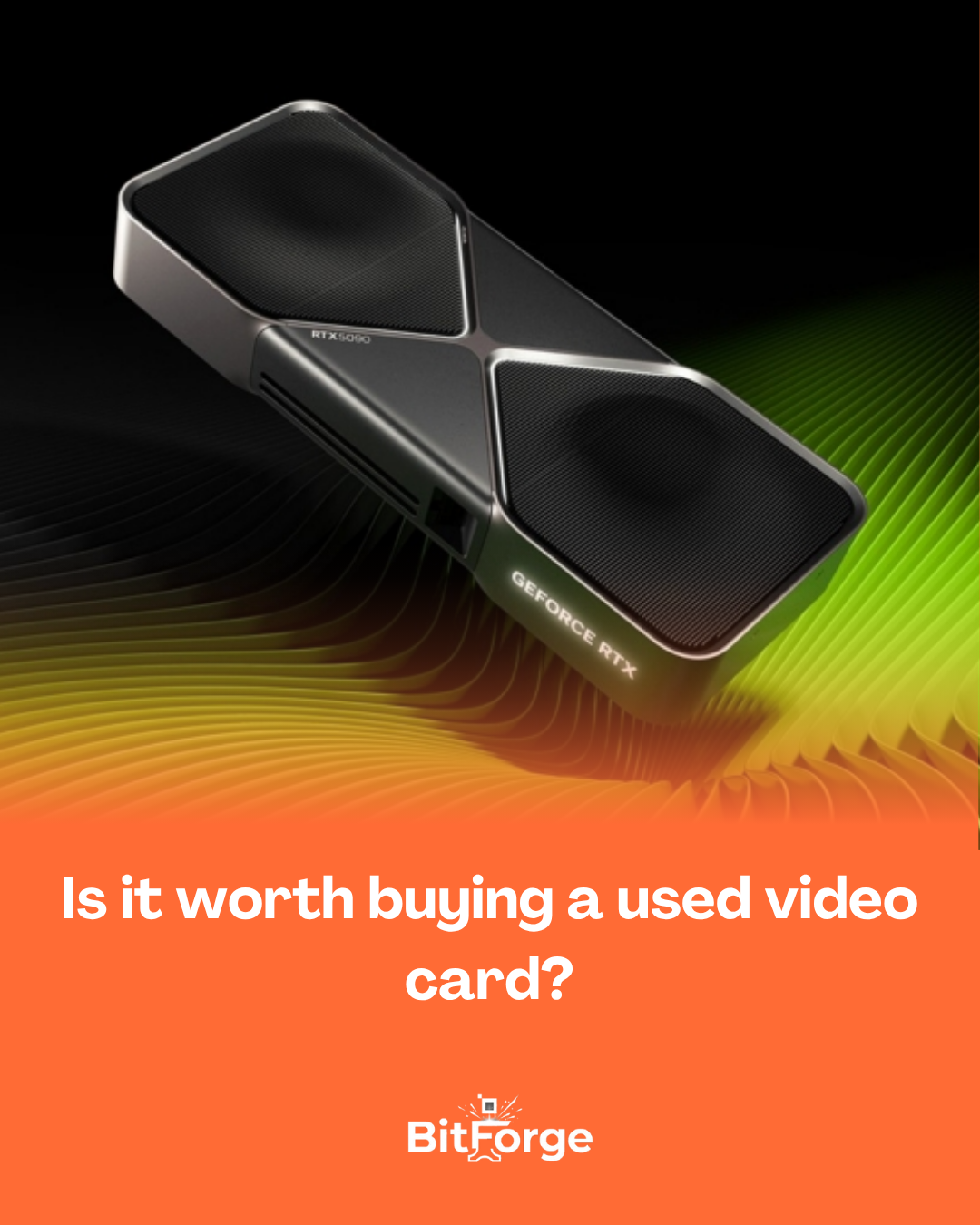
The biggest reason to buy a used GPU is simple: saving money .
In the hardware market, new video cards are usually expensive. A GPU that cost R$3,000 when it was released may appear for R$1,500 or less on the used market a few years later.
This means you can get significantly more performance for the same amount of money .
Typical example:
- A new intermediate board can cost R$1500.
- For the same price, you can find a higher-end used GPU.
For gamers, those who work with video editing, or those who want to run demanding programs, this can be a huge advantage.
⚠️ Risks that few people consider
Buying used hardware always involves uncertainty. In the case of GPUs, some risks are more common.
1️⃣ Intense use (mainly mining)
Many of the boards used came from cryptocurrency mining farms .
This means the circuit board may have remained functional.
- 24 hours a day
- 7 days a week
- for months or years
This type of constant use can accelerate component wear. Some manufacturers point out that GPUs used for mining can lose performance over time, reaching a drop of about 10% per year in extreme cases .
But it’s important to understand something curious:
➡️ Not all mining GPUs are destroyed.
Some miners even reduce the clock speed and voltage to improve efficiency, which can decrease wear and tear.
2️⃣ Cooling problems
The parts of the body that suffer the most from the effects of time are:
- coolers
- thermal paste
- thermal pads
These parts may be dry or worn, causing higher temperatures.
The good news:
this is usually inexpensive to fix .
Replacing thermal paste and pads is inexpensive and can completely renew the motherboard.
3️⃣ Lack of guarantee
This is one of the biggest drawbacks.
New motherboards usually have a 2 to 3 year warranty .
A used one may not have one.
If there’s a problem after a month… the loss is yours.
🧠 When is it worth buying a used GPU?
Buying used can be a great idea if:
✔ The price is well below that of a new one
✔ The board can be tested beforehand
✔ There is still warranty remaining
✔ The seller seems trustworthy
One principle that many enthusiasts use is simple:
“It’s only worth taking the risk if the discount is large enough to compensate for the risk.”
For example:
- New GPU: R$2500
- Used GPU: R$1500
Saving R$1000 already creates a margin for possible repairs.
🔎 What to check before buying
If you intend to buy a used motherboard, these are some essential points to consider.
📦 Ask for real photos
Be wary of ads without product photos.
🧾 Ask about the origin
Important questions:
- Was it used for mining?
- How long has it been used?
- Do you still have the invoice?
🧪 Test the board
If possible:
- rode benchmarks
- test games
- observe temperatures
👀 Look for physical signs
Note:
- excessive dust
- Marked screws (plate opened many times)
- noisy fans
⚖️ New vs. used: which one to choose?
New license plate
- guarantee
- longer lifespan
- zero initial risk
- higher price
Used plate
- much better performance for the same price.
- greater risk
- may require maintenance
🧾 Conclusion
Buying a used video card can be an excellent strategy for saving money , especially if you want more performance while spending less.
But think of it like a used car :
If you pay attention to detail, you can find a great opportunity.
If you buy blindly, you might end up bringing a problem home.
📌 Simple rule:
if the discount is large and the license plate is in good condition, it’s definitely worth it.
Frequently Asked Questions:
1. Is buying a used graphics card safe or too risky? It’s a decision that can be excellent or a costly mistake depending on how it’s made. The used graphics card market is genuinely advantageous in many cases—a previous-generation GPU in good condition can deliver performance very close to new models for a fraction of the price. But unlike other used components like RAM or SSDs, the graphics card is one of the components most susceptible to wear and tear from misuse, and this wear and tear often doesn’t show up on visual inspection. A card that has run for years at high temperatures, has been used for cryptocurrency mining without proper maintenance, or has had dried-out thermal paste may look perfect on the outside and exhibit intermittent failures weeks after purchase. The risk exists, but it’s manageable with the right precautions.
2. Are graphics cards used for cryptocurrency mining more problematic? This is the most debated point in the used GPU market, and the answer is more nuanced than most people imagine. Cards used for mining have operated under constant load for months or years—unlike gaming use, which alternates between periods of high and low load. Ironically, constant operation at a controlled temperature can be less damaging than intense gaming sessions followed by repeated abrupt shutdowns. The real problem with mining cards isn’t necessarily chip wear, but neglected maintenance—dried-out thermal paste, fans with worn bearings, and capacitors stressed by constant heat. A well-maintained mining card can be in reasonable condition. A mining card abandoned in a hot and dirty environment for years is a serious problem.
3. How to test a used video card before buying? Testing in person is the best protection a buyer has and should never be skipped if possible. The ideal test consists of installing the card in the PC and performing a specific sequence of checks. First, run diagnostic software such as FurMark or 3DMark for at least thirty minutes, monitoring temperature, frequency, and GPU usage — if the card exhibits excessive throttling, visual artifacts, or crashes during this period, it’s a clear sign of a problem. Second, check the temperatures reached during the test — a healthy card with good thermal paste rarely exceeds 85°C at maximum load in most models. Third, physically inspect the fans, capacitors on the card, and power connectors for signs of burning, corrosion, or visible physical damage.
4. What warning signs indicate that a used video card should be avoided? Some signs are immediately dismissible, while others require more careful investigation. Immediately discard it if there are visible signs of burning or darkening anywhere on the card, bulging or leaking capacitors, power connectors showing signs of overheating, or if the seller refuses to perform an in-person test without a convincing justification. Also be wary of sellers who cannot provide information about the card’s usage history, who ask for prices close to that of a new card without justification, or who have a poor track record on sales platforms. Visual artifacts on the screen during testing—colored dots, horizontal lines, or distortions—are serious signs of problems with the GPU’s memory chips that are rarely cost-effective to repair.
5. Is it better to buy a used, previous-generation GPU or a new entry-level one? This comparison is at the heart of the decision for most buyers, and often the used, previous-generation GPU wins. New entry-level graphics cards are often disappointing in gaming performance—manufactured with reduced specifications to achieve a low price, they often deliver a mediocre experience even in less demanding games. A previous-generation GPU that was mid-range or high-end when released, bought used at a significant discount, usually delivers clearly superior performance for the same price or less. The secret is to research benchmarks of the specific model being considered and compare them to what is available new in the same price range—the numbers rarely lie.
6. Are there any used GPU generations or models that offer better value for money in 2026? GPUs from the last two or three generations of Nvidia and AMD’s mid-range lines usually represent the best balance between price, performance, and support for modern technologies. Very old models, even if inexpensive, may not support technologies such as ray tracing, intelligent upscaling, or the latest graphics APIs required by modern games—which limits the longevity of the investment. The ideal scenario is to find a GPU that was launched as a high-mid-range or top-of-the-line model two or three years ago, which is now being sold used because the owner upgraded. These models still have active driver support, support current technologies, and deliver significantly superior performance compared to newer options in the same price range.
7. What minimum discount justifies buying a used GPU instead of a new one? The general rule adopted by experienced buyers is not to consider a used GPU that costs more than 60% to 70% of the price of an equivalent new one. Below 50% of the new price is considered a good deal. Below 40% is excellent but requires more careful investigation into the reason for the low price. The reasoning is simple — when buying used, the buyer gives up the manufacturer’s warranty, the certainty about the usage history, and the peace of mind of having a new product. This set of risks and sacrifices needs to be compensated by a real and significant discount, not by a marginal saving of 10% or 15% that does not justify taking any additional risk.
8. Is it possible to recover a used video card with temperature problems? In many cases, yes, and this can represent an opportunity for those willing to perform basic maintenance. Cards with temperature problems often only need thermal paste replacement and fan cleaning—relatively simple procedures that anyone with patience and a suitable tutorial can perform. The thermal paste on a used card may be completely dried out, which in itself can cause temperatures 15°C to 20°C higher than normal. Cleaning the heatsink, replacing the paste, and lubricating or replacing the fans can completely transform the card’s thermal behavior. Buying a used GPU with a known temperature problem for an even lower price and performing the maintenance can be an excellent deal for those who know what they are doing.
9. Is buying a used GPU from a private individual or a specialized store safer? Each option has real advantages and disadvantages. Stores specializing in used components often offer some warranty period—usually 30 to 90 days—which represents important security for a component of significant value. This warranty has a cost embedded in the price, so stores rarely offer the absolute best prices. Buying directly from a private individual usually results in better prices, but requires more due diligence from the buyer—checking the seller’s history on sales platforms, demanding an in-person test, and having more technical knowledge to assess the condition of the card without a safety net. For less experienced buyers, the extra fee paid at a store with a warranty is often worth the peace of mind. For those with technical knowledge and who know what to test, buying directly from a private individual usually offers a better deal.
10. So, is it worth buying a used graphics card, or is the risk not worth it? It’s worthwhile for those who do their homework before buying. The used GPU market offers genuine opportunities that the new market simply can’t replicate—previous-generation performance at prices that make gaming accessible to many more people. The risk exists, but it’s manageable with the right precautions—testing in person, knowing the warning signs, researching the specific model, and demanding a real discount that justifies taking the risk. Those who buy without testing, without researching, and without criteria are in fact taking an unnecessarily high risk. Those who approach the purchase carefully and knowledgeably find in the used GPU market one of the best ways to build or upgrade a gaming PC without compromising their budget—and this is a reality that experienced hardware enthusiasts have been taking advantage of for decades.